Journal home / All articles / The restoration process
Rebedding and repointing ridge caps
Ridges fail before tiles do. Flexible pointing, a bed that still has sand in it, and a crew willing to lift the caps are the difference between a restoration and a membrane stretched over a joint that will walk in the next storm.
Dean Harcourt · 21 April 2025 · Updated 30 June 2026
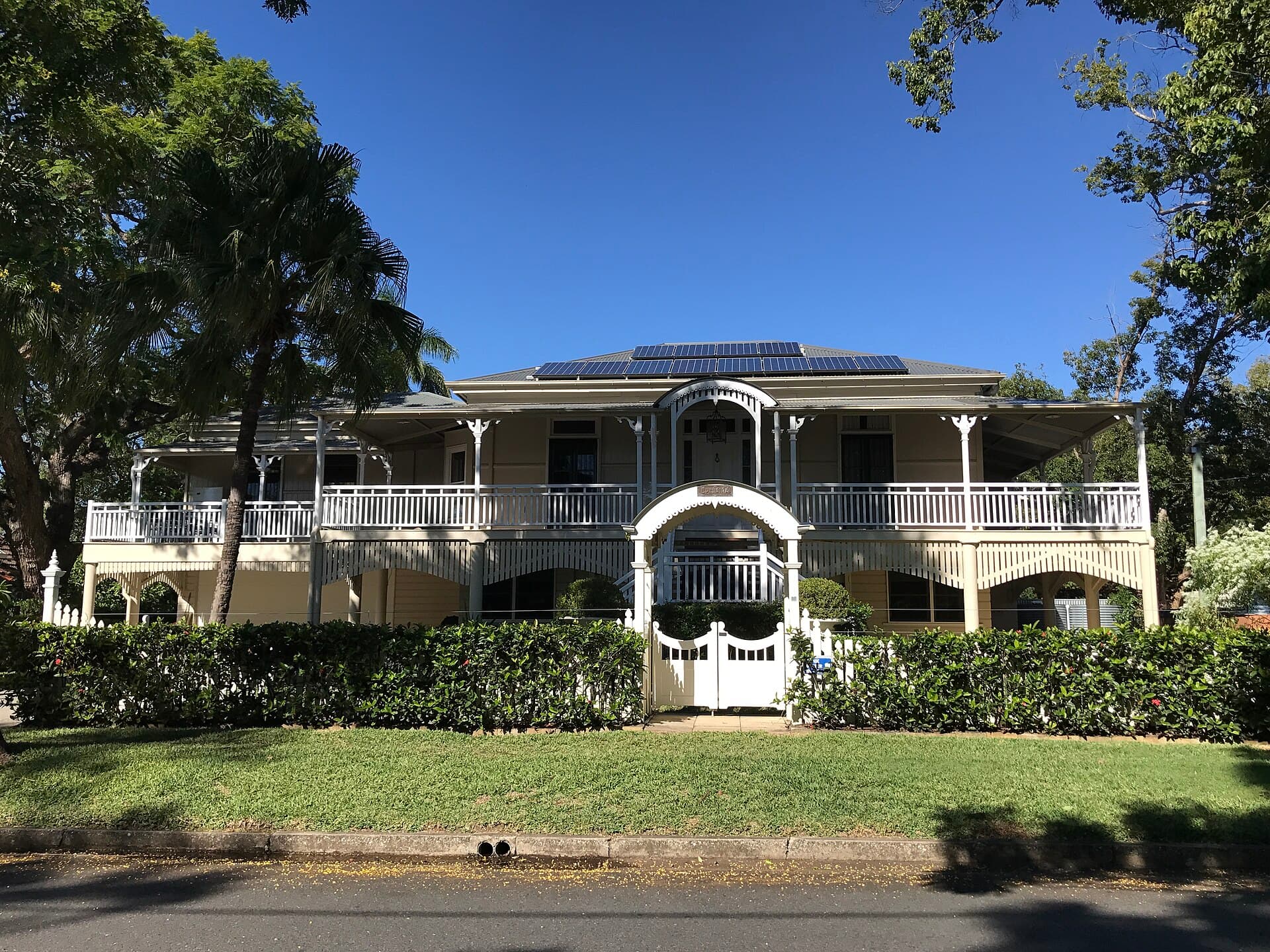
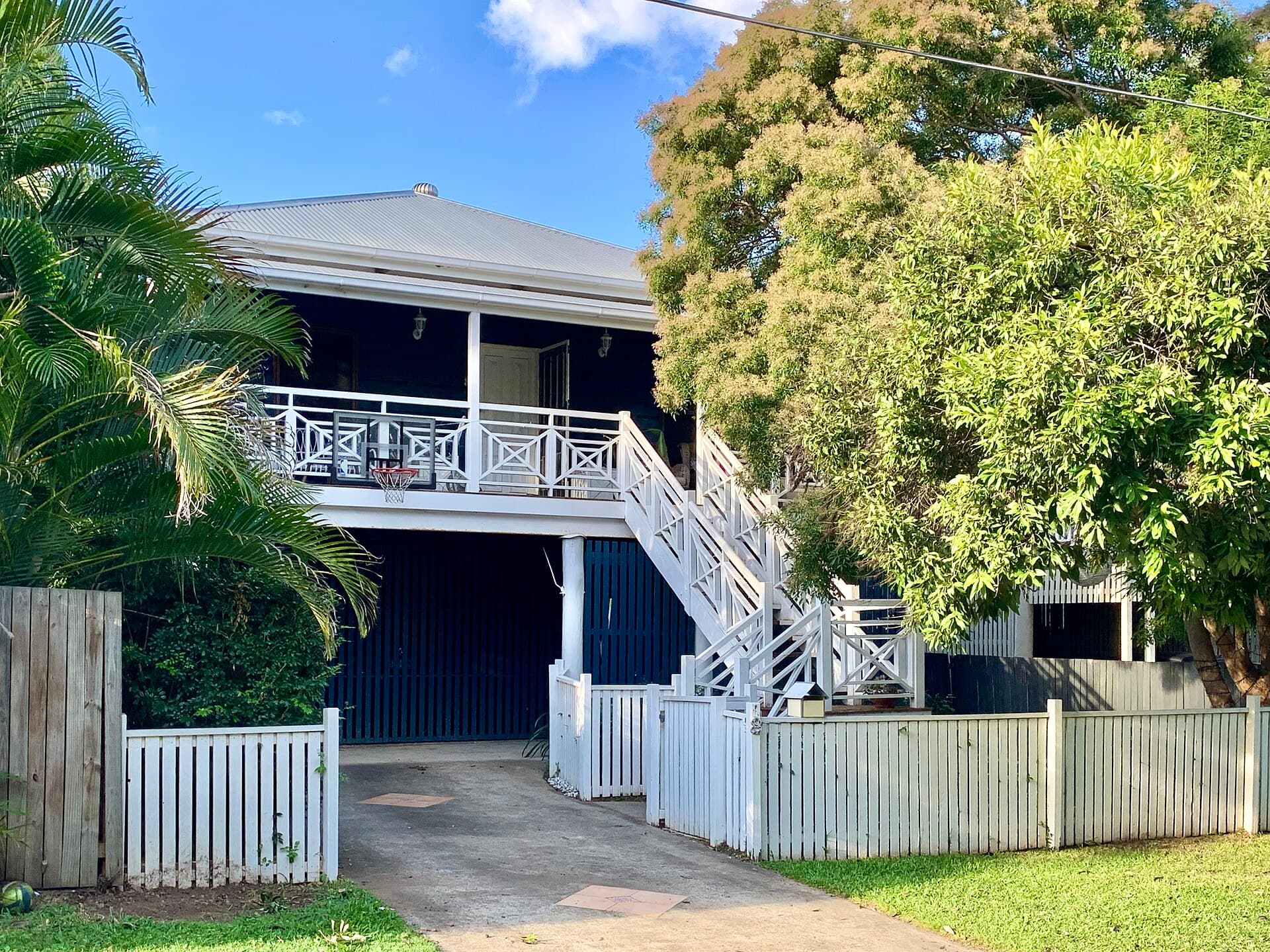
Timber house with a tiled roof in Chelmer, Brisbane. Photograph: Kgbo. CC BY-SA 4.0. Source: Wikimedia Commons. See the image credits page.
Ridge caps are the part of a tiled roof that looks ceremonial and behaves like a hinge. They run the hips and the crown. They take the boot of every inspector, the first punch of a northerly, and the slow expansion of a house that has been swelling and shrinking in Brisbane humidity since the Whitlam years. When they fail, water does not politely wait at the tile face. It goes to the batten, the ceiling, and the room you painted last spring.
The old restoration sequence treated ridges as work, not as trim. Lift the failed bedding and pointing. Reset the caps on a fresh bed. Point with something that can move. Then, and only then, wash and coat. A surprising number of contemporary quotes reverse that order, or skip the ridge altogether, because a membrane photograph looks the same from the street either way. It does not look the same from the manhole after a storm.
This is a trade essay about mortar, colour, the walk along a ridge, and why a skip-the-ridge job is a restoration only in the marketing sense. The full sequence still begins with what is broken. On most Brisbane tile roofs, what is broken is the line against the sky.
What a ridge is actually doing
A concrete or terracotta ridge cap is a cover, not a beam. It sits on a bed of mortar that takes the shape of the tiles beneath and holds the cap against wind. Pointing closes the joints between caps and the visible edge of the bed. The bed does the holding. The pointing does the weatherproofing and the look. Confuse the two and you will pay to have the look redone after every summer.
In a still week the distinction is academic. In a cell that crosses Redcliffe and then the bayside, or a southerly that finds a high-set in New Farm, the ridge is a test. Caps that are only sitting — bed crumbled to sand, pointing a painted crust — lift, shift, and come down in the gutter or the garden. Tiles along the hip then have a free edge. Water has a path. The membrane, if it was painted across that joint, tears like skin over a knuckle.
Houses in Chelmer and Corinda, with their long hips and their timber movement, show this earlier than a stiff low-set in Aspley. That does not mean the low-set is immune. It means the Queenslander tells on you sooner.
Flexible pointing and the cement that would not bend
Traditional cement pointing is still on thousands of roofs from Greenslopes to Cleveland. It was what the trade had. It is also brittle. A cement joint on a ridge is a small concrete beam asked to follow a timber house through storms, heat and the slight twist of a bearer that has dried and wet again for forty years. It cracks. The crack is hairline, then it is a gutter, then it is a stain on a cornice.
Flexible pointing compounds — polymer-modified, designed to take a little movement without opening — exist because the old mix could not do the job this climate asked of it. They are not magic and they are not all equal. Some skin well and stay ugly. Some take a tint and then chalk. Some are specified for a temperature window that a humid March afternoon will ignore. Read the sheet. Apply to a clean, sound bed, not to last century's dust.
There is a habit of smearing flexible compound over unlifted, failed cement and calling the ridge done. That is makeup. The cap is still sitting on powder. The new pointing has nothing structural to hold. The next storm does not care that the joint is a nicer colour.
If you can walk a ridge and feel the caps move under a careful boot, the pointing is not the problem. The bed is gone. Painting it is a courtesy to the street, not to the ceiling.
Cement still has a place in the bed, mixed so it holds and still works with the tiles. What it should not have is a monopoly on the joint that faces the weather. Brisbane roofs move. Pointing that cannot move is a scheduled crack.
The ridge walk
Working at heights is its own subject, and this journal will not pretend a paragraph is a safety system. What belongs here is the inspection habit: a ridge walk, on a roof that can take it, with soft soles and a plan for where you will not step. You are listening as much as looking. A sound cap is dull and sure. A failed one clicks, shifts, or gives you the particular silence of a void where mortar should be.
Do not bounce. Do not walk a terracotta ridge like a concrete one. Do not use the walk as a shortcut across a pitch you should have crossed on the tiles. The walk is diagnostic. It is also how ridge caps get broken by the people who came to save them.
From the ground you can already see a lot. Caps out of line. Joints open like teeth. Rust streaks from an old iron ridge on a mixed roof. Missing pieces in the gutter. A binocular look from the street in Clayfield will not replace a walk, but it will tell you whether the quote that says “pointing only” is even in conversation with the house.
Access decides how honest the inspection can be. A low-set in Gumdale with a modest pitch is a different morning from a two-storey in Ascot with a solar array parked across the only sensible path to the crown. If the crew cannot get to the ridge safely, they cannot rebed it. They can only coat what they can reach and hope. Hope is not a bedding mortar.
Mortar colour, faded tiles and the street
Homeowners notice colour. They notice it more than film thickness and less than a leak, which is a pity, because they will live with a bad colour longer than they think. Fresh pointing on a faded concrete roof in Sunnybank Hills can look like a white diagram drawn on a grey field. On terracotta in Shorncliffe a pointing that is too pink or too grey will read as a repair from the footpath for a decade.
The useful method is boring. Take a dry tile from the roof, not a wet offcut from the pile. Mix small. Let it dry. Look at it in the afternoon, not only in the morning glare. Tint to the tile you have, which has been UV-bleached and lichen-stained, not to the tile in the brochure from 1991. After a membrane the colour relationship changes again. If the roof is being coated, point for the finished colour, or accept that you are pointing twice.
There is no honour in a pointing that matches a sample board and loses the house. There is also no honour in a black joint on a pale tile because someone thought contrast looked crisp. Crisp is for kitchens. Ridges should disappear.
Bedding failure after storms
Storms do not only break what was already cracked. They find the ridge that was merely tired. A cell that sits over Birkdale, or a hail band that clips Karalee, will lift caps that had been sitting on a bed reduced to damp sand. The owner sees the aftermath — a cap in the garden, a dark line on the ceiling — and assumes the storm was the cause. The storm was the examination. The bed had been failing through two quiet summers.
After a storm, the honest repair is still the old one. Lift, clean, rebed, point. Replacing a single cap with a smear of mortar and a prayer leaves the neighbours on the same exhausted bed. A restoration that follows a storm should treat the whole ridge line as suspect, not only the gap you can see from the driveway.
Insurers and owners sometimes want the smallest possible sentence: replace the missing cap. A journal is allowed to say that the smallest sentence is how you meet the next storm with the same roof. If the claim is limited, say what was not done. Do not call a single-cap patch a rebed.
Hail complicates the picture because it also breaks tiles and dents metal. The ridge may be the least of the photograph and the first of the leaks. Inspection order still holds. Structure, then water paths, then cosmetics.
Why skip-the-ridge restorations fail
They fail because the membrane is asked to be mortar. A flexible acrylic film can bridge a hairline for a season or two. It cannot hold a cap that has lost its bed. When the cap moves, the film tears at the joint, water tracks along the underside, and the leak appears three tiles down from the place you would look. The owner is told the coating failed. The coating did what a skin does when the bone shifts.
They also fail because the wash, done over a loose ridge, drives water into the open bed. A pressure lance at a failed joint is a hose into the roof space. The crew then coats a roof that is wet in the one place the film cannot see. Blisters along a hip after the first hot week are not a mystery. They are a wash and a skip, in that order.
A third failure is quieter. The pointing looks fine. The bed is powder. Five years later a storm takes a run of caps and the owner discovers that the “restored” roof was a painted shell. Warranties written on that job are warranties written on a hope. This journal's piece on warranties that survive the first storm is the money version of the same argument. Here the argument is mechanical. If the cap can move, the film will fail. If the film is the only thing holding the cap, you do not have a ridge. You have a delay.
How a competent rebed actually runs
The work is dusty and slow, which is why it gets skipped.
- Protect the gutters and the garden. Old mortar will go everywhere.
- Lift caps in a sequence you can reverse. Number them if the profile varies.
- Clean the tile shoulders back to something a new bed can key to. Do not bed on lichen or paint.
- Replace cracked caps. A coated crack is still a crack.
- Bed to a line. A crooked ridge is visible from every upstairs window in the street.
- Point when the bed can take it, in a weather window that is not about to rain.
- Do not coat the pointing until the compound has done what the sheet says it needs to do.
On a long hip in Clayfield that is a day. On a simple crown in Geebung it may be a morning. Either way it is not a line you can do from a ladder with a caulking gun and a podcast.
Matching discontinued ridge profiles is the same headache as matching tiles. Concrete ridges from the 1970s are still around in yards and on demolished houses. Terracotta is harder. A mismatched cap on a heritage ridge is a permanent apology. Better to search than to hope the membrane will hide the shape. It will not. Light finds edges.
What to ask before you sign
Ask whether the ridges will be lifted. Ask what the bed is, and what the pointing is, by product type rather than by adjective. Ask whether the colour is mixed to the finished roof. Ask what happens if the walk finds a hip that is past rebedding and into tile and timber. Ask how the crew will get to the crown on your particular geometry — high-set, solar, two-storey, a tree that owns the western pitch.
If the answer to the first question is a shrug, you are not buying a restoration of the ridge. You are buying a colour. There is a place for a colour, on a roof whose ridges were done properly five years ago and only need a wash and a film. There is no place for a colour that pretends to be a bed.
Brisbane will keep testing the line against the sky. The houses that stay dry are the ones whose caps are sitting on something that still deserves the name mortar, pointed with something that can follow a little movement, and inspected by people who were willing to walk the ridge before they priced the paint.
Questions from the verandah
- What is the difference between bedding and pointing on a ridge?
- Bedding is the mortar bed the ridge cap sits on. Pointing is the finish along the joints and the visible edge. A restoration that paints the pointing and leaves the bed rotten has not touched the part that holds the cap.
- Why does cement pointing crack on Brisbane roofs?
- Cement is brittle, roofs move, and subtropical storms lift and drop a ridge that was never designed as a concrete beam. Flexible pointing compounds exist because the old mix could not follow the house.
- Can you restore a tile roof without redoing the ridges?
- You can coat it. You should not call that a restoration. The first decent cell will find the hairline you painted over and open it.
- How do you match pointing colour to faded tiles?
- Mix to the tile on the roof, not to a wet sample on a board in the driveway. Faded concrete and old terracotta both lie about their colour until they are dry and in place.