Journal home / All articles / The restoration process
Anatomy of a Brisbane roof restoration
The old trade sold a tidy sequence and a two-to-three-day finish. On a real Brisbane roof the order still holds, but the weather, the timber and the last crew's shortcuts decide whether it is honest work or a brochure.
Meredith Keane · 12 March 2025 · Updated 4 August 2026
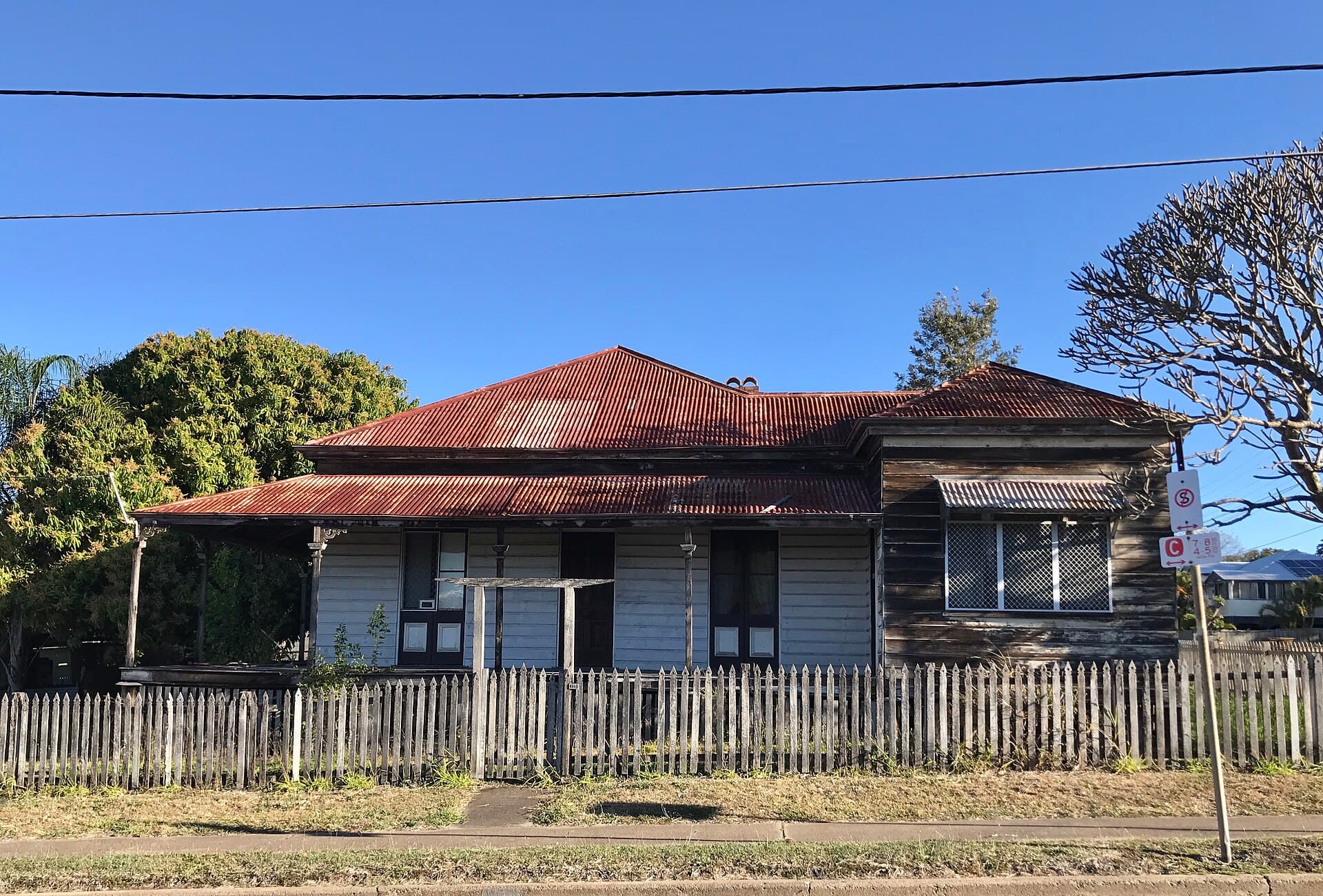
Weathered Queenslander with a corrugated roof in Booval, west of Brisbane. Photograph: Kgbo. CC BY-SA 4.0. Source: Wikimedia Commons. See the image credits page.
A restoration, as the old Brisbane crews described it, was never a single product. It was a sequence: find what has broken, put it back, wash the rest, then lock the surface against a climate that spends half the year trying to grow things on it. The flyer compressed that sequence into a weekend and a colour chart. On a high-set in Corinda, or a low-set brick veneer in Aspley, the work still follows the same order. What changes is how much of the roof is already arguing with the specification.
The honest version begins on the ground. Before anyone hangs a hose from a ridge, someone who can read a roof should walk the perimeter, look up into the eaves, and then — if the pitch and the access allow — go onto the tiles with soft-soled boots and a plan for where not to step. Broken corners announce themselves. So do rusty valleys, slipped ridge caps, and the dark bloom of lichen that tells you the last clean was either gentle or a long time ago. What does not announce itself is a batten that has been wet for a decade, or a valley iron so thin that a boot heel would finish the job the rust started.
What the brochure promises
The old contractor pages, the ones that still live in Wayback captures, listed a familiar menu. Inspect and replace broken tiles. Cut out rusty valleys. Lift the old bedding and pointing. Reset the ridges. Pressure clean and flush the gutters. Repoint, reseal the flashings, then a sealer and two coats of a heavy acrylic membrane. Two to three days, weather permitting. A written warranty. A promise to beat a written quote.
That menu was not a lie. It was a description of a competent job on a roof that was still structurally willing. Plenty of houses in Greenslopes and Sunnybank Hills received exactly that treatment and sat quietly through the next decade of storms. The trouble is that a menu is not a diagnosis. A roof in Chelmer with a collapsed valley and a ridge that walks when you stand on it is not two days from a membrane. It is a conversation about timber, access, and whether restoration is even the right word.
The sequence is the point. A membrane applied over failed pointing is not a restoration. It is a colour change on a roof that still leaks.
Site reality is slower and more local than any flyer. A crew that arrives at a New Farm Queenslander may spend the first morning on broken Marseilles tiles and a valley that has to be fabricated, not patched. The same crew, the next week, may finish a simple hip-and-ridge concrete roof in Geebung inside the advertised window because nothing underneath was rotten and the last pointing, though brittle, came off cleanly. Both jobs are restorations. Only one looks like the brochure.
Inspection, tiles and valleys
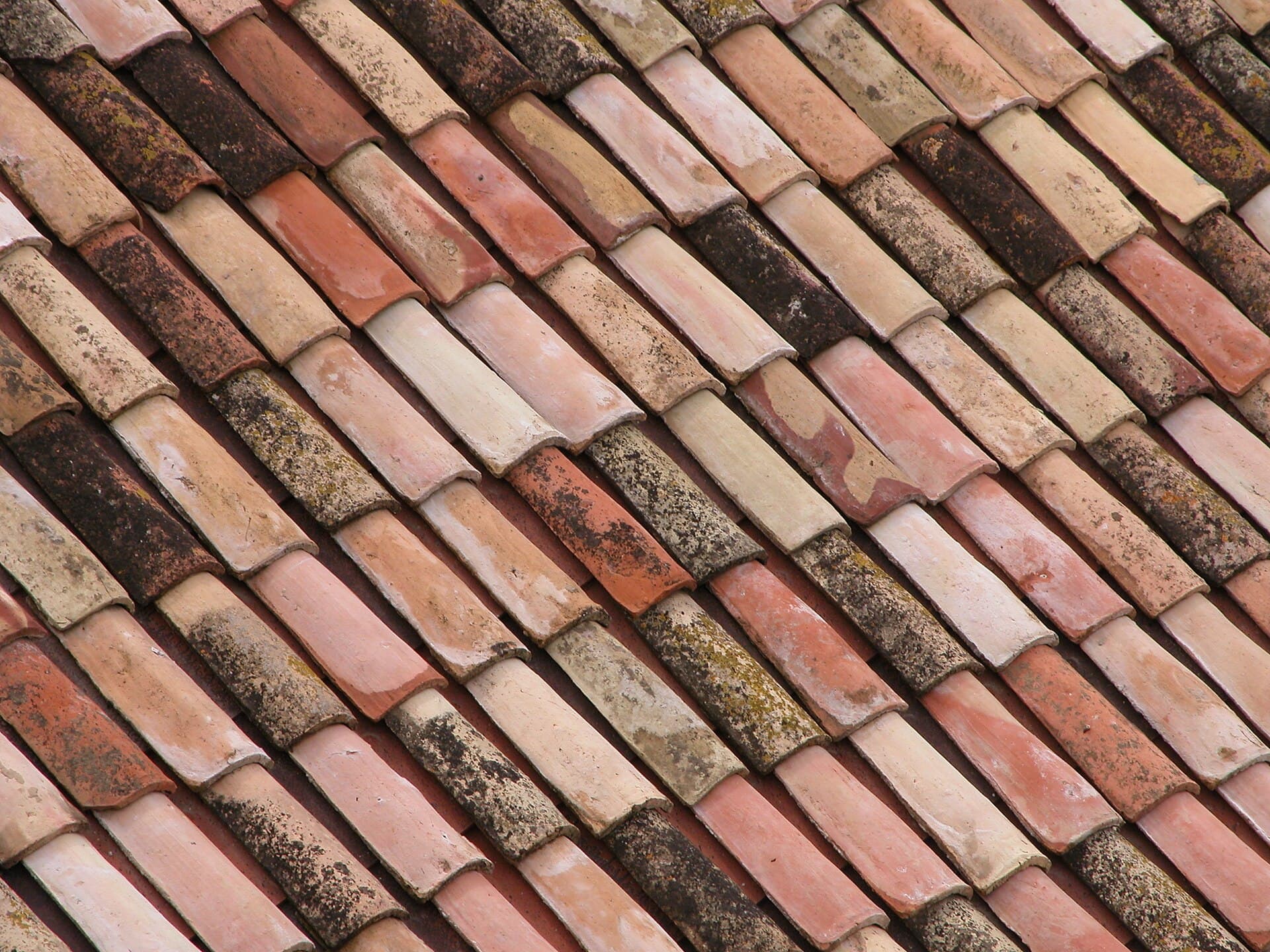
The first useful work is not washing. It is deciding what must come off before water touches the roof. Broken tiles — corners snapped by a branch, a boot, or the last hail cell that crossed Redcliffe — have to be lifted and replaced with a matching profile, or as close as the yard still holds. Concrete tiles from the 1970s and 1980s are still common enough that a careful match is possible. Terracotta is another argument, and one this journal takes up elsewhere. On mixed roofs, the inspector should also mark every sheet of valley iron that has gone to lace. Painting rust is not a valley repair.
Valleys collect the water from two planes and send it, if they are still sound, into the gutter. In subtropical rain that is a lot of water in a narrow trough. A rusty valley in Clayfield or Birkdale is not a cosmetic problem. It is a hole with a schedule. Replacing it means lifting tiles on both sides, cutting and seating new metal, and putting the tiles back so the water still knows where to go. That labour does not appear on a colour chart.
Flashings around chimneys, vents and solar stanchions belong in the same first pass. If they are cracked, short, or sealed with a sausage of silicone that has already let go, the membrane will not save them. The restoration either includes new metal and a proper turn-up, or it includes a future leak with a new colour around it.
Ridges: the work most quotes try to skip
Ridge caps sit on a bed of mortar and are pointed along the joints. In Brisbane that bedding fails in two familiar ways. Cement shrinks and cracks. Storms lift a cap just enough that the next cell finishes the job. Walking a ridge that has already let go is how people discover, too late, that the cap was only resting. The old sequence was unambiguous: lift the failed bedding and pointing, reset the ridges on a fresh bed, then point with a compound that can move a little when the roof moves.
A skip-the-ridge restoration is cheaper on paper and expensive after the first summer storm. The membrane bridges hairline cracks for a season. Then the ridge walks, the coating tears, and water finds the batten. Anyone writing a specification should treat rebedding and repointing of ridge caps as structural work, not as a line item that can be value-engineered out of a tight quote.
Colour of the pointing matters more than homeowners expect. A bright white joint on a charcoal roof will look like a diagram for two years and then stain. A pointing that is too dark on a faded terracotta will read as a repair forever. The trade used to mix to the tile, not to the brochure. That habit is still the difference between a roof that belongs to the street and one that announces the contractor.
Washing, gutters and the mess below
Only after the broken work is marked and, preferably, the ridges are reset does pressure cleaning earn its place. The point of the wash is not to make the roof photogenic for the coating truck. It is to lift lichen, moss, dirt and the chalk of the last failed paint so the sealer can wet the tile instead of the grime. Concrete tiles in Aspley and Regents Park are porous and will take a surprising amount of water. Terracotta in Ascot and Shorncliffe is less forgiving of a close nozzle.
Gutters have to be flushed while the roof is wet, not the following Tuesday. Slurry from a clean will set in a downpipe like a cheap concrete. On a low-set in Gumdale that is an afternoon with a hose and a bucket. On a two-storey in New Farm it is access, fall protection, and a conversation with whoever owns the garden the downpipes empty into. Overspray on solar glass, painted eaves and a neighbour's car is not a footnote. It is a claim waiting for a wind change.
A competent wash also shows what the inspector missed. A tile that sounded solid when dry can lift once the moss that was holding it has gone. A valley that looked stained can reveal pinholes. This is why the brochure's tidy day-one / day-two split is a hope, not a plan. The wash is a second inspection, conducted with water.
Repointing, flashings, sealer and two coats
When the roof is clean and dry enough — and in a Brisbane autumn that may be the next morning, while in a wet January it may be three days — the pointing is finished and the flashings are resealed. Then the coating system goes on in the order the manufacturer wrote down, not the order that fits a Friday deadline. A sealer or primer first, because a porous concrete tile will drink the first coat and leave nothing on the surface. Then two membrane coats, each thick enough to be a film rather than a stain, with a recoat window that respects dew and humidity.
The old trade talked, without much ceremony, about systems in the Dulux AcraTex family and their cousins: heavy acrylic membranes specified for roofs, not wall paint thinned and pointed at a tile. This journal does not endorse a brand. It does insist that a restoration finish is a membrane system with a primer or sealer and two topcoats, applied inside the weather window the data sheet describes. Anything thinner is a colour, and colours do not stop capillary cracks.
Dry-film thickness is the unglamorous measurement that separates a specification from a spray-and-go. If the crew cannot tell you what they are aiming for, they are aiming for the job to look finished from the street. That is not the same as a film that will move with a concrete tile through a decade of UV and a week of northerly rain.
Two or three days, weather permitting
The phrase is doing a lot of work. Two or three days is plausible for a modest concrete roof with sound timber, a simple hip-and-ridge plan, and a forecast that holds. It assumes the tiles are in the ute before the crew arrives, the valleys are a known length, and nobody opens a ceiling cavity to find a batten that has become compost. Weather permitting means no coating on a wet tile, no pointing that will be rained on before it skins, and no pressure cleaning into a northerly that will paint the neighbour's verandah with lichen soup.
On a high-set Queenslander in Corinda the same sequence can run to the better part of a week once you count access, broken terracotta, and the time it takes for a washed roof to dry in humid air. On a low-set in Karalee with a clean concrete profile and no solar array, the brochure timeline is not fantasy. The skill is knowing which house you are standing in before you promise the other one.
Weekends and public holidays do not repeal dew points. A crew that starts a topcoat at four on a March afternoon in Cleveland is gambling that the evening will not put a film of moisture on a tacky membrane. Sometimes they win. The houses that generate letters to this desk are the ones that lost.
Brochure and site, side by side
It is useful, when you are holding a quote, to put the flyer and the roof in the same sentence.
- The flyer lists broken tiles as a line. The roof may need a profile that has not been made since 1987.
- The flyer lists rusty valleys. The roof may need the tiles lifted two metres either side, not a smear of paint in the trough.
- The flyer lists rebedding. The ridge may be sitting on powdered mortar that will not come off without taking tile edges with it.
- The flyer lists a wash. The wash may flood a gutter that has not been detached from a rusty downpipe bracket in twenty years.
- The flyer lists two coats. The tile may still be damp under a morning that looks fine from the street.
None of that makes restoration a bad idea. It makes it a trade, which is to say a sequence of judgements. The houses that do well — and there are many of them, from Birkdale across to the inner south — are the ones where someone walked the roof before they priced the membrane, and where the owner was told which parts of the sequence were certain and which depended on what the wash revealed.
There is also the opposite case, which this journal treats as its own subject: when restoration is the wrong job. Rotten battens, a valley that has already collapsed into the ceiling, widespread tile failure, structural movement, asbestos in older products, a leak you intend to paint over. Those roofs need a different sentence. Restoration language on a failed structure is not optimism. It is a delay with a warranty-shaped letterhead.
How to read a quote against the sequence
If you are comparing two pieces of paper, ask them to follow the old order out loud. Where do broken tiles and valleys sit? Is the ridge being lifted or merely painted? When does the wash happen relative to the repairs? What is the coating system, in coats, not in brand adjectives? What happens if the wash finds something the inspector did not?
A quote that begins with a colour and ends with a finish date has skipped the anatomy. A quote that prices the inspection, the replacements, the ridge, the wash, the pointing and the film — and that admits the weather can move the days — is describing the job as it is still done on roofs that last.
The sequence has not changed because the climate has not changed its mind. Brisbane still grows lichen on a north pitch and still throws a cell across the bayside that will test every joint you left brittle. Anatomy, in this trade, is just the refusal to start at the end.
Questions from the verandah
- How long does a typical Brisbane tile roof restoration take?
- A competent crew can usually finish a straightforward house in two to three working days if the weather holds. Complex geometry, rotten timber or a wet week will stretch that without anyone being idle.
- What is the actual sequence of a restoration?
- Inspect and replace broken tiles and rusty valleys, lift failed bedding and pointing, reset the ridges, pressure clean and flush the gutters, then repoint, reseal flashings, and apply a sealer plus two membrane coats.
- Why do some restorations fail in the first wet season?
- Because the membrane went on over cracked ridges, rotten battens or unflushed valleys. A coating cannot hold water that the roof is already inviting in.
- Is a restoration the same as a paint job?
- No. Paint sits on the surface. A restoration is a sequence of repairs that happens to finish with a membrane. Skip the repairs and you have only changed the colour of the leak.