Journal home / All articles / Aftercare and the envelope
The first twelve months after restoration
A newly coated Brisbane roof is not finished when the trailer leaves. It is finished when it has cured, taken a real storm, survived the first later trades, and shown you where the work was honest.
Patrick O'Shea · 3 July 2025 · Updated 9 August 2026
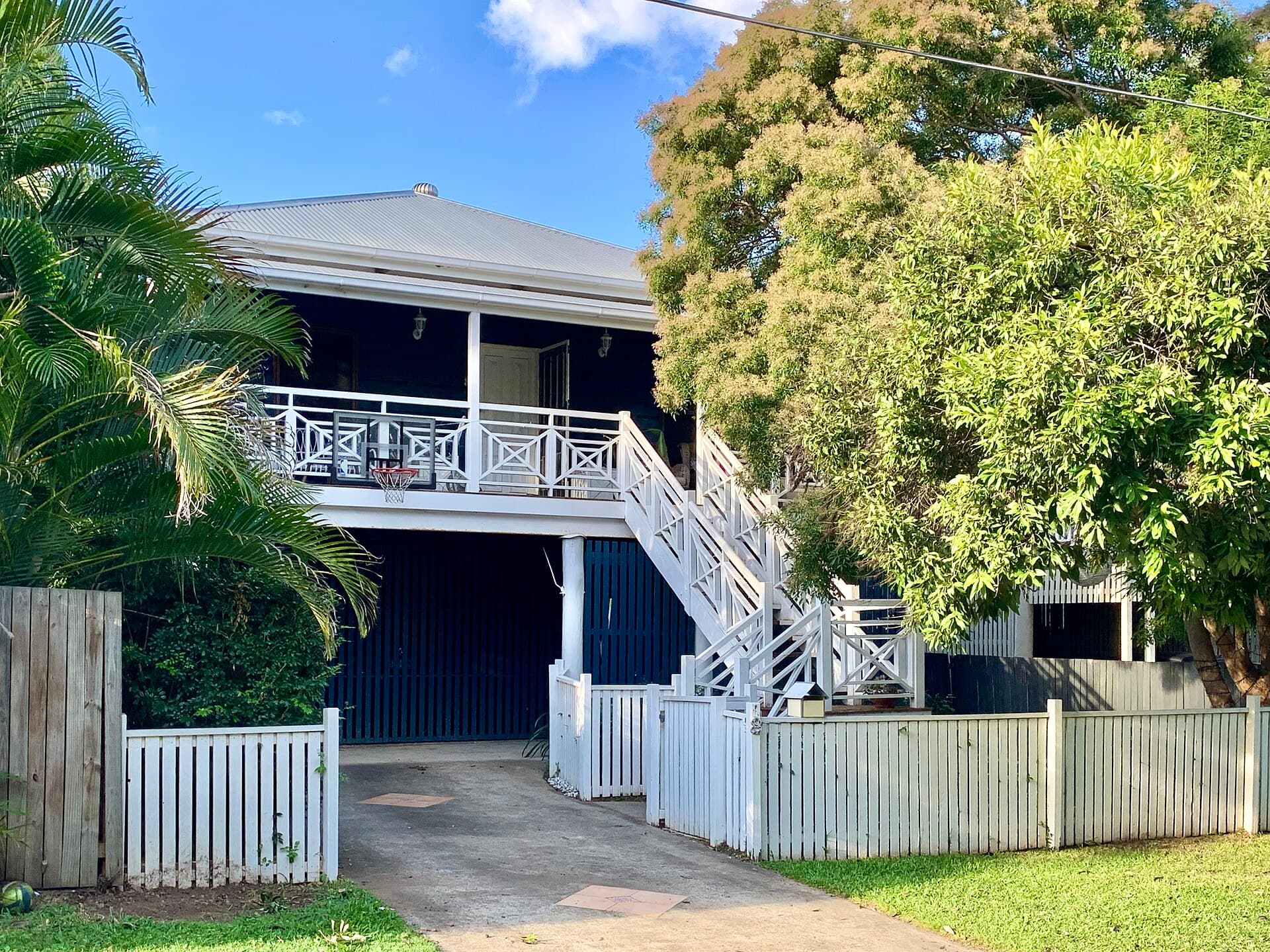
Low-set house and roofscape in Corinda. Photograph: Kgbo. CC BY-SA 4.0. Source: Wikimedia Commons. See the image credits page.
The after photograph is a liar, or at least a flatterer. It is taken on a clear late morning, usually from the same angle as the before shot, with the pressure cleaner packed away and the ridge still wet enough to shine. Neighbours say it looks brand new. The owner feels the particular relief of a job that is no longer about to start. Then the trailer turns out of a Corinda or Kedron street, and the roof begins the only year that actually tests the work.
Acrylic membranes continue to cure after they are touch-dry. Pointing continues to find the movement in a subtropical ridge. Valleys continue to carry the water they carried before anyone mentioned colour. The first real storm — not a polite evening shower, but the kind of Brisbane cell that turns the downpipes into drums — is the first honest inspection. The first solar installer, the first person who walks the south pitch to retrieve a cricket ball, and the first spring of leaf drop are the next ones. Aftercare is not a loyalty program. It is the rest of the job.
The old contractor pages understood this in a practical, unsentimental way. They offered a written warranty, a call-back, and sometimes a driveway clean so the house looked finished at ground level too. They did not, if they were any good, tell you the roof had become invulnerable. A licence from the QBCC, or the QBSA card that older paperwork still shows, does not alter the chemistry. Neither does a harness left in the ute. The film still has to live through a year of South East Queensland.
Curing is a weather argument
Read the data sheet you should have been given with the batch numbers. It will talk about dust-free times, recoat windows, and full cure in language that assumes a temperate, obedient climate. Brisbane is not that climate. Humidity hangs around after an overnight storm. Winter can still be warm enough to spray, then cool enough at dusk to slow a film. Summer can be too hot on a west pitch by ten in the morning, and too wet by three.
For the first days, treat the roof as a wet process even if it looks dry. Keep everyone off it. Keep the dog off the skip remnants. Do not water-blast the driveway in a way that mists the new eaves if the coating is still young; overspray and rebound stain more easily than canvassers admit. If the crew offered driveway high-pressure cleaning as a same-day extra, ask whether the roof film can take the drift. Sometimes the path should wait a week. The old combined offer was convenient. Convenience is not a cure schedule.
Full cure, depending on product and weather, can run into weeks rather than an afternoon. During that time the film is more easily marked by pollen, by the first sticky fig drop, and by a careless boot. It is also more easily damaged by a second trade who “only needs ten minutes up there”. Write that sentence into any later booking. Your restoration contractor cannot police the world. You can police the diary.
The first storm is not a catastrophe until it is
You will want to go into the ceiling after the first proper cell. Do it with a torch, not with a narrative. Look at the usual places: the valley lines, the chimney or flue, the skylight, the screw lines if you have metal, the ridge, the junction where a later addition meets the original roof. A new membrane does not waterproof a failed valley. If water is moving where it always moved, you may be looking at an exclusion, not a surprise. The tracing method belongs with leak tracing when the new membrane still weeps. The legal and documentary side belongs with warranties that survive the first storm.
Condensation can fool a nervous homeowner. A cold snap after a humid week, or an air-conditioned room under an uninsulated pitch, will put moisture on the underside of tiles and iron that has nothing to do with the coating. Rain-driven leaks tend to track from a penetration or a valley and arrive with a weather event. Condensation arrives with a temperature argument. Knowing the difference will save you a useless argument and a useful one.
If the storm has moved pointing, lifted a tile the crew reset, or driven water through a flashing they replaced, call them with photographs, dates, and the Bureau’s rainfall for that afternoon. Owner-operators come back because their name is on the van. Canvassers are harder to find in March. This is why the verandah conversation in winter should have named the person who answers the phone in autumn.
Walking rules, and the people who will ignore them
A coated tile roof is not a deck. The film can scuff. Tiles can still crack. Ridges are still a place you can fall from. If you must walk — a stuck branch, a suspected slip after hail — wait for dry, use shoes with a soft, clean sole, step on the supported parts of the tile as the original crew should have shown you, and spend as little time as possible at the eaves. Working at heights does not stop being a hazard because the job is notionally finished. A homeowner on a two-storey Queenslander without a harness or a rail is still a person at height. Most of the time the correct aftercare action is to stay on the ground and ring someone who has gear.
Write walking rules into any instruction you give later trades.
- Solar installers: path agreed in advance, no dragging of frames, penetrations sealed to a named method, broken tiles replaced from your labelled, coated spares, batch record consulted if touch-up is needed.
- Antenna and air-conditioning crews: no “it’ll be right” screws through valleys or flashings. If they must cross the roof, they cross it as a workplace.
- Painters of fascia and barge: their overspray is now your membrane problem. Mask or sequence the work so the roof is not the drop sheet.
- Anyone offering a free roof inspection after a storm: they are often canvassers. They will walk a young film to sell you another coating.
If a later trade damages the roof, photograph it before anyone “makes it good” with a hardware tube. The restoration contractor and the manufacturer will both ask who made the hole. Your notes are the difference between a warranty conversation and a shrug.
Staining, chalking and the marks that are not leaks
New films show dirt. They show tannin from jacarandas, figs, palms and the blackbean that seemed charming at purchase. They show rust streaks from a valley that was painted over rather than replaced. They show lime or cement haze if pointing residues were not washed off. They sometimes show a faint lap mark where a recoat window was missed. None of these is automatically a failure of the membrane. All of them are information.
Photograph stains when they appear, and again after rain. A rust streak that lengthens is a valley or a screw talking. A brown bloom under a tree that fades after a shower is likely tannin. A white dusty film that wipes off may be early chalking or residue. A dark bloom in a south valley that spreads through winter is the beginning of the moss and lichen conversation you will have every year in this climate.
Do not attack a young film with bleach, sugar soap, or a hired pressure cleaner because a mark offends you in month two. Call the crew. Ask what the product can tolerate. The first twelve months are when aggressive cleaning does more harm than the stain. The seasonal pattern of what to do later sits in a seasonal maintenance calendar for SEQ roofs. This page is about not panicking early, and not inventing a cleaning ritual that voids the only document you have.
When to call the crew back, and how to do it so they can act
Call back when the specification has failed, or when something they touched is leaking. Open pointing on a ridge they rebedded. A tile they replaced that has slipped. Peeling in sheets rather than ordinary dirt. A flashing they fitted that weeps. Ponding they created by filling a profile or blocking a path to a downpipe. Coating in gutters so thick that water sits against a fascia.
Do not call back, or at least do not open with accusation, when the quote excluded the rusty valley and the valley is now doing what rusty valleys do. Do not call back because a canvasser from another firm has knocked and offered to “finish the job properly”. Do not call back without photographs. Owner-operators will still come, but they are entitled to know whether they are looking at their work or at the house’s older arguments.
Have the folder ready: quote, exclusions, product names, batch numbers, licence search, warranty documents, the dates of application, and the weather on those days if you noted it. That folder is aftercare. It is also how you avoid becoming the person who says “they promised it wouldn’t leak” without being able to say what they promised.
Asbestos does not retire when the coating is dry. If a later job will cut an eaves lining or grind a barge, the same stop-and-test rule applies as it did in winter. A new membrane on the tiles does not identify a fibre-cement soffit. Keep that thought in the folder too.
A roof is not restored when the after photograph is taken. It is restored when the first storm, the first later trade and the first summer have all failed to make a liar of the specification.
The first year is when you learn whether you hired a crew or a performance. The shine will dull. The storms will arrive. Someone will want to walk the pitch. If the ridge is still tight, the valleys still carry, the film still keyed to the tile, and the person who did the work still answers the phone, the restoration was a restoration. If not, you have time — not infinite time, but enough — to deal with it while the documents are still current and the memory of the verandah conversation is still sharp. Use the year. Do not waste it on the after photograph.
Questions from the verandah
- When can someone walk on a newly coated roof?
- Not as soon as it is dry to the touch. Follow the product’s recoat and cure notes, and then treat the first weeks as fragile anyway. Soft-soled, short visits, never on a wet film, and not as a shortcut to clean a gutter. If you do not need to be on it, do not.
- Is the first stain a failure?
- Often not. Tannin from trees, rust streaks from a skipped valley, and residue from pointing can all mark a new film. Photograph it, note the weather, and call the contractor with evidence rather than with panic. Persistent weeping is a different conversation.
- Should I let a solar installer on in month two?
- Only with a method that protects the film, replaces any broken tiles from your labelled spares, and reseals every penetration. A cheap solar date that ignores the restoration is how a twelve-month roof becomes a twelve-month dispute.
- When is a call-back reasonable?
- When something the specification promised is not performing: pointing that has already opened, a leak at a worked flashing, coating that is peeling in sheets, ponding that the crew created. Not when a storm has driven rain through an unreplaced valley the quote excluded.