Journal home / All articles / Aftercare and the envelope
Leak tracing when the new membrane still weeps
A coating can make a sound roof shed more cleanly. It cannot turn a failed valley, a wet chimney or a sweating ceiling into a waterproofed idea. Tracing is how you stop arguing with the wrong surface.
Dean Harcourt · 25 August 2025 · Updated 23 August 2026
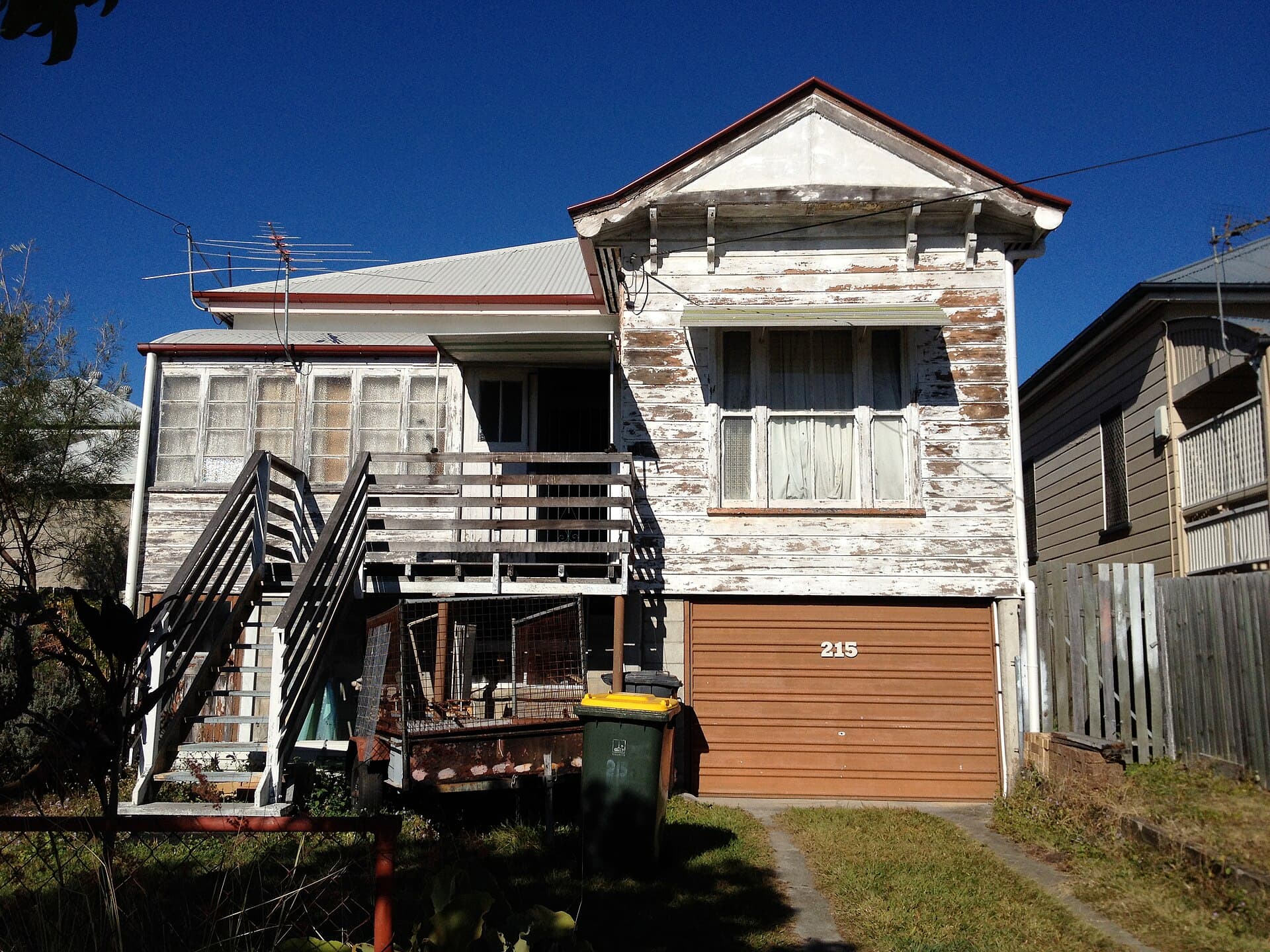
Timber Queenslander in New Farm, Brisbane. Photograph: Kgbo. CC BY-SA 4.0. Source: Wikimedia Commons. See the image credits page.
There is a particular disappointment that arrives in a Brisbane ceiling six weeks after a restoration. The ridge is the colour you chose. The neighbours have already complimented the street front. Then a brown flower opens in the plasterboard after an ordinary Thursday cell, in the same place it opened last year, or in a new place that feels like a betrayal. The temptation is to ring the contractor and say the membrane has failed. Sometimes that is true. More often the membrane has done the only thing it can do — sit on the field of the roof — while water has used a path that was never a field.
Leak tracing is not mysticism. It is a refusal to start at the stain. Water enters somewhere, travels, and arrives. In a high-set Queenslander in New Farm or a 1980s veneer in Carseldine, the travel can be several metres along a rafter, a valley tray, or the top of a wall plate. The stain is the end of the sentence. The entrance is the subject.
A coating is a film. It can reduce porosity in a concrete tile, lock down a surface that was powdering, and help water run to the places designed to take it. It is not a new valley. It is not a chimney flashing. It is not a ridge that was never rebedded. It is not a screw someone drove into a pan in 2014. If the quote excluded those things, the leak is not a surprise. It is a consequence. The longer argument about when a house should not have been restored at all lives in when restoration is the wrong job. This page assumes the job happened, the film is new, and the ceiling is wet anyway.
Start with weather, then with the plan of the roof
Write down the day, the time, the wind if you noticed it, and what the Bureau said about rainfall. A leak that appears only in wind-driven rain from the north-east is a different object from a leak that appears after any shower, or a damp patch that appears on a clear winter morning. Take a photograph of the ceiling stain and of the roof plane above it, even if you only have a shot from the yard. Note whether the stain is on an external wall, under a valley, under a ridge, under a flue, or in the middle of a room that sits under a long run of tiles.
Then look at the plan. Brisbane roofs are rarely a simple pair of planes. There is the original hip, the rear skillion, the verandah, the later second storey, the solar array, the neighbour’s two-storey wall that creates a box gutter you did not know you owned. Each join is a candidate. Gutters, valleys and flashings after the coating is the aftercare map of those joins. Use it. A new membrane makes some of them harder to see, because rust has been painted into respectability.
Do not climb a wet two-storey roof to satisfy curiosity. Working at heights does not become a hobby because you have a stain. If you cannot see from the ground, the verandah, or a safe, short ladder look at a gutter line, hire a licensed person. The QBCC register — historically the QBSA list older households still name — is how you find a roof plumber rather than a canvasser who will diagnose “needs recoating” from the path.
Condensation is not rain, and rain is not always a hole
Subtropical houses sweat. A metal roof over an uninsulated room on a clear night after a humid day will put droplets on the underside of the pans. A bathroom exhaust that was never ducted to the outside will put moisture into a roof space that then drips in a place that looks like a valley leak. Air-conditioning that cools a room hard under a dark, newly coated west pitch can move the dew point around. Homeowners who have just paid for a restoration are primed to see every droplet as a failure of the purchase. Some are. Some are physics.
Condensation clues: moisture on many surfaces, not a track; a still morning rather than a storm; a room that generates steam; a roof space with little ventilation; no grit or rust in the stain; a pattern that eases when you change exhaust or insulation. Rain clues: a track; a coincidence with weather; a repeatable arrival after cells from a particular direction; rust, silt or pointing grit in the ceiling; a wet rafter that can be followed.
Both can be present. A small rain entry can keep timber damp enough that condensation has somewhere to bloom. Tracing still starts by asking which story the last wet patch is telling.
Insurance language will try to collapse the two. Storm, tempest, sudden damage, wear and tear, defective work: these are not synonyms. If you are heading toward a claim, read the companion piece on insurance, storm claims and restoration before you file a paragraph that a loss adjuster will unpick. A new membrane does not turn wear into storm. A storm does not turn an excluded valley into the contractor’s gift.
The usual Brisbane entrances after a restoration
The list is short, and it is almost always one of these.
- Valleys. The tray was rusted, short, or painted. Water still concentrates there. The stain often follows the valley line, even if it arrives a metre to one side along a rafter. Look for rust streaks on the new film. Look at the discharge into the gutter. Look, if a licensed person is up there, at whether the tiles still sit over the tray or have been bedded in a way that lets water under.
- Ridges. Pointing that was already open, or a rebed that did not take, will let wind-driven rain under the capping. A membrane on the tiles beside the ridge does not seal the ridge. After a restoration, hairline cracks can be ordinary; missing chunks are not. A ridge leak often appears along a centre wall or in a hallway.
- Chimneys, flues and older vents. Apron flashings split, rust, or sit short. A crew that sprayed around them without lifting them has left the original metal to finish its life. The stain is often against an external chimney breast or in the room beside it.
- Screws and later holes. Metal roofs collect fasteners. Solar frames collect more. A screw in a pan, a cable through a mastic blob, a discarded dish bracket — these are precise entries. They weep in a way that looks mysterious until someone follows the underside and finds the bright point of light.
- Gutters and overflowing eaves. Sometimes the ceiling is wet because the gutter is blocked with acrylic and fig fruit, and water is running behind the fascia into the wall. The roof field is innocent. The outlet is not.
- Broken or slipped tiles the restoration missed, or a later walker created. A solar installer in month two is a classic author of this story. So is a person retrieving a ball. The film around the break may look fine. The break is not a film problem.
Asbestos caution belongs here as method, not as cause. If tracing requires cutting an eaves lining or disturbing a fibre-cement sheet, stop and test. A leak does not justify a reckless opening. The water can wait an extra day.
How to call the crew so the visit is a diagnosis
Bring the folder. Quote, exclusions, product names, batch numbers, dates, photographs of the storm and of the stain, a note about later trades. Say what you have already ruled out from the ground. Do not open with a legal threat. Owner-operators will still come; they came because their name is on the work. They will not come faster if you have already decided they are thieves.
Ask them to start at the likely entrance, not at a respray. Ask them to photograph what they find. Ask whether the repair is pointing, a tile, a tray, a flashing, or a conversation about the original specification. If the honest answer is that restoration was never going to fix this roof, that is a bitter sentence and a useful one. It is cheaper than a second membrane.
If the original seller was a canvasser, you may not have a crew. You have a number and a subcontract that has moved on. This is why the verandah conversation was supposed to name the licensed contractor and the classes they held. A painting class that covered the film may not cover the valley that must now be replaced. Roof plumbing is a different licence. Hire it.
The stain is a messenger. If you punish the messenger with another coat of acrylic, the water will still know the way.
What not to do while you wait
Do not put a bucket in the ceiling void and forget it. Do not poke the plasterboard until it collapses. Do not pour sealant into a gutter outlet. Do not hire a pressure cleaner to “test” the roof; you will add water and possibly break tiles. Do not let a second canvasser walk a young film to sell you a different colour. Do not bleach a stain on a new membrane because it looks like mould and you would like it gone before the in-laws visit.
Do put a bucket under the drip in the room if the ceiling is still intact. Do turn off electricity to a fitting that is wet. Do dry what you can. Do keep children off the verandah if the leak is bringing down grit or if anyone is working above. Do remember that the person who eventually climbs should still have a method for heights: rails, harnesses, a second person. A leak is not an excuse for a reckless ladder.
Driveway high-pressure cleaning, the old companion service, will not find your leak. It may show you, after the next rain, where a gutter is dumping onto the path. That is a clue, not a repair.
Tracing is a discipline of not being theatrical. The new membrane is one surface among many. Sometimes it has failed at an edge, or missed a tile, or been walked too soon. Often it is the only part of the roof that is doing what was paid for, while an older tray or a later screw continues a story that began before anyone mentioned colour. Follow the water. Name the entrance. Then decide whether you are calling a restorer, a plumber, an insurer, or all three. The ceiling will wait long enough for that sentence to be accurate. It will not wait long enough for a third coat to become a personality.
Questions from the verandah
- If the roof was just coated, isn’t any leak the coating’s fault?
- Only if the specification promised to waterproof the thing that is leaking, and the method could have done so. A membrane on tiles does not rebuild a holed valley. Start with the water path, not with the colour.
- How do I tell condensation from rain?
- Rain-driven leaks track from a penetration or a tray and arrive with weather. Condensation arrives with a temperature and humidity argument, often on still mornings, often over bathrooms and uninsulated rooms. Both can wet a ceiling. They do not have the same repair.
- Should I get a second restoration quote if it weeps?
- Get a diagnosis first. A second canvasser will sell you another coating. A roof plumber or the original owner-operator will look at the valley, the ridge and the flue.
- Will insurance treat this as storm damage?
- Sometimes, if a storm created a sudden failure. Often not, if the leak is wear, an exclusion, or workmanship. Read [insurance, storm claims and restoration](/articles/insurance-storm-claims-and-restoration) before you file a sentence you cannot support.