Journal home / All articles / Tile, tin and mixed roofs
Terracotta tiles on Queenslanders and interwar homes
Fired clay on a timber house is character, weight and a different set of rules. Brittle Marseilles profiles, a gentler clean, and the question of whether to coat at all sit at the centre of the inner-suburban roof.
Lila Nguyen · 23 June 2025 · Updated 28 July 2026
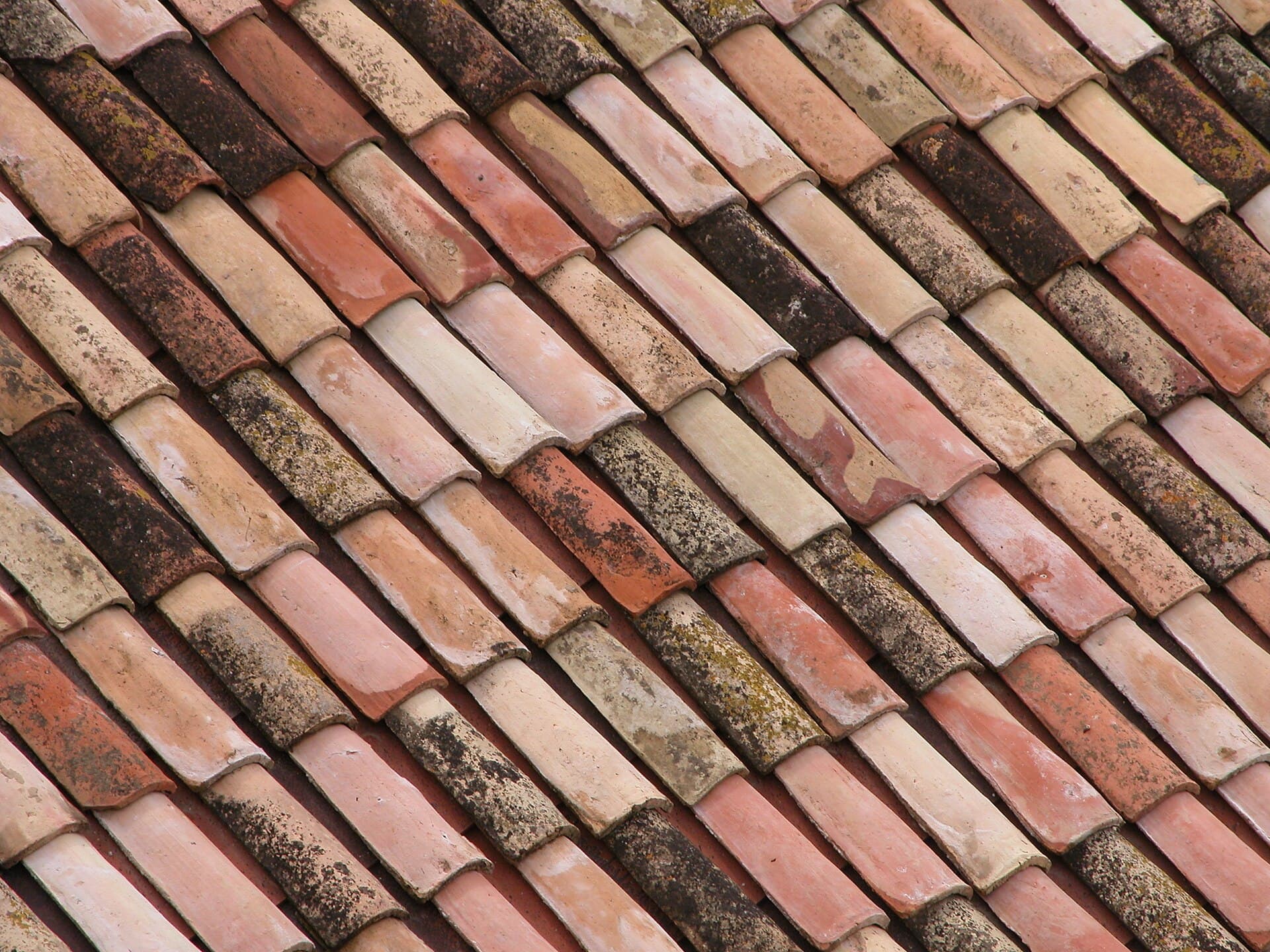
Monk-and-nun terracotta tiles in close detail. Photograph: Procsilas Moscas. CC BY 2.0. Source: Wikimedia Commons. See the image credits page.
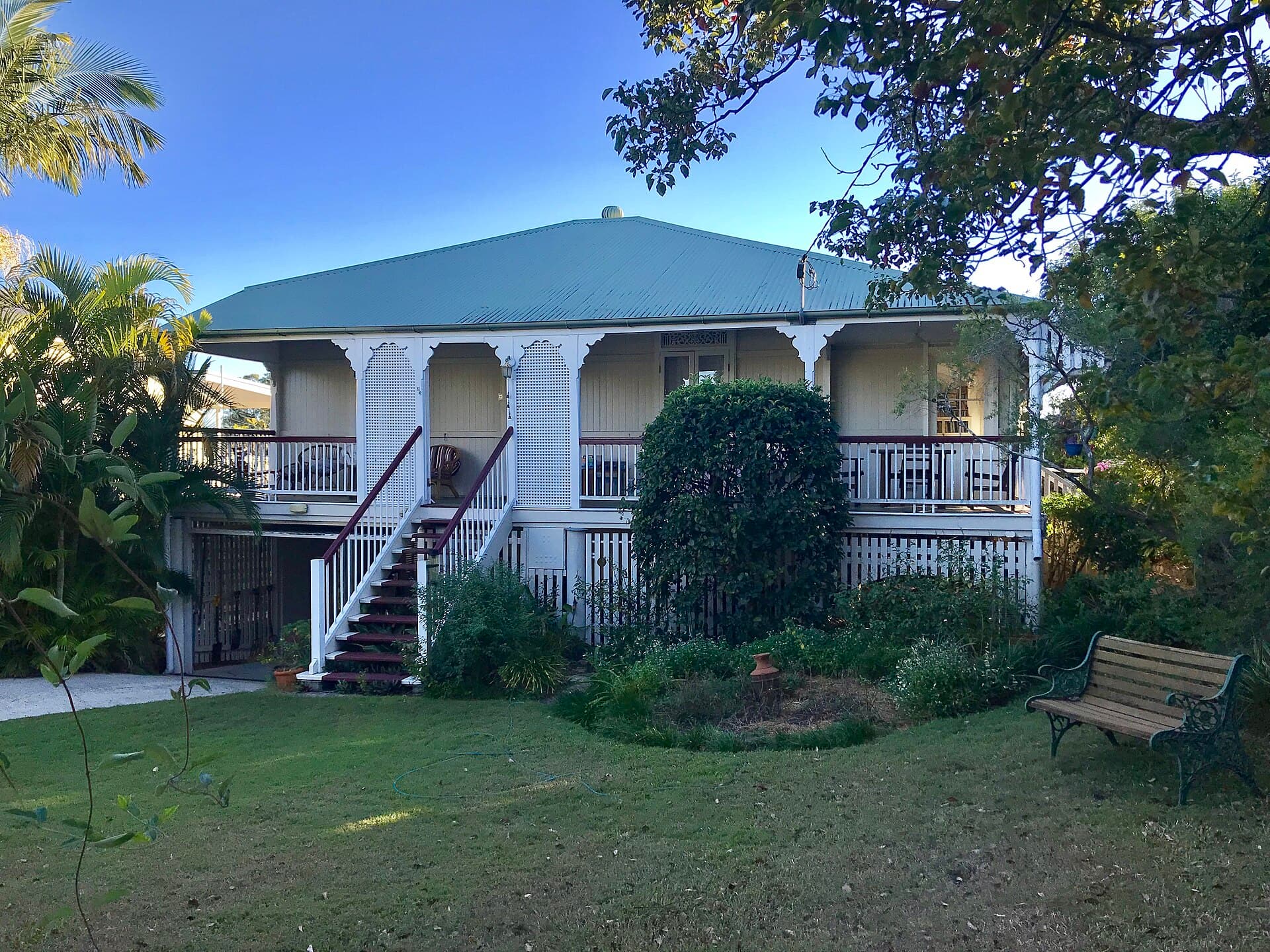
Terracotta on a Brisbane roof is a different contract from concrete on an estate. The tile is a fired thing. The house under it is often timber, high-set, slightly moving, and bought in part because of the way late light sits on a Marseilles profile. In Chelmer, Corinda, Clayfield, Ascot, New Farm and the older pockets of Greenslopes, that roof is not a background. It is why the verandah looks like a verandah.
It is also why restorations go wrong here in a particular way. Crews trained on porous concrete bring a jet, a charcoal tint and a two-day diary to a brittle ceramic and a heritage overlay they have not read. The tile breaks. The colour vanishes. The owner has a darker house and a pile of shards that no longer match the street.
This is not an argument that terracotta is sacred. Some of it is tired, leaking, already painted, and honestly in need of a system or a replacement. It is an argument that clay and concrete are not the same job wearing different colours. The concrete-tile map is the ordinary roof. This is the one that still turns heads from the footpath, and still cuts hands in the gutter.
Character, and the weight of a look
A Queenslander or an interwar bungalow with its original terracotta has a silhouette the city has decided to value. Planning schemes and character overlays in the inner suburbs do not always dictate a brand of tile, but they do dictate a conversation. Painting a whole clay roof a uniform dark membrane can be, on some streets, a change of character dressed as maintenance. On other streets it is how a leaking roof was kept on the building. The distinction is local. Ask before you assume the charcoal in the sample book is a right.
Character is also practical. Terracotta is heavier than many people think when they start talking about swapping to metal. The structure that has been carrying clay for eighty years may or may not want a different system without someone reading the timber. The reverse is also true: a restoration that adds a heavy film, or that replaces broken clay with a thicker concrete “match,” is a small change in load and a large change in look.
Shorncliffe and parts of Redcliffe hold their own older clay, in a weather that comes off the water with more wind than a still street in Corinda. The tiles there have been tested. The ones that remain are not necessarily the ones you should test again with a close nozzle.
Brittleness, movement and the sound of a tired tile
Fired clay does not fail like concrete. It does not powder in the same way. It cracks. It loses an arris. It rings differently under a knuckle when the body has had enough. A tile that has been in the sun and the storm since before the house had a bathroom downstairs has a right to be tired. Timber movement underneath — the high-set habit of swelling and drying — works at the same tile year after year.
Walking these roofs is a specialist caution. Soft soles, stay off the middle of a suspect tile, use the laps, do not bounce, do not use the ridge as a highway. High-set geometry makes the walk longer and the fall worse. None of that is romance. It is how you avoid being the person who broke the tile you came to save.
Broken terracotta is sharp. Gutters fill with shards that will find a hand. Replacement is not a matter of grabbing a grey concrete from the trailer and calling the membrane a disguise. On an uncoated roof the new tile will read as a repair for years unless the match is careful. On a roof about to be coated, the match can be closer in colour and still wrong in profile. Light finds the wave.
Hail and branches do the obvious damage. So do satellite dishes, solar stanchions and the last painter's plank. Count the failures as a density. Ones and twos are a restoration. A pitch that crumbles as you work is a strip, or a stop.
A different clean
Concrete will often take a pressure lance if the operator keeps their distance. Terracotta, especially older terracotta, is how you learn that “often” is not a specification. Glaze, where any remains, etches. Unglazed faces lose their fire-skin. A jet against the headlap drives water into a roof space that was only just coping.
Soft wash — chemistry, dwell, a low-pressure rinse — is frequently the less destructive clean on these houses. It is slower. It needs a plan for the garden and the tank. It will not give you the same instant before-and-after as a jet on a grey estate roof. What it can do is leave the tile intact. That is the clean that matters on clay.
Some terracotta should barely be washed at all. If an edge crumbs in the fingers, if the inspector is already writing a long replacement list, the washer is not a diagnostic tool. It is an accelerant. Clean what you can by hand, replace what you must, and do not invent a reason to blast a heritage pitch because the machine is already on the trailer.
Moss and lichen sit in the profiles and in the shaded valleys of a high-set. They look worse than they always are, and they sometimes are as bad as they look. Lift a little. See whether the tile under the growth is a tile or a biscuit. Then choose a method.
When not to coat terracotta
This is the sentence that should appear on more quotes than it does.
Do not coat sound terracotta by default. A fired tile with its colour intact is already a finished surface. A membrane on that tile is a fashion, or a way of hiding a mismatch.
If the leaks trace to pointing or a flashing rather than to porosity, and the body is still hard, the clay is doing the job it was fired for. A film on that tile will change how it handles moisture, hide future cracks until they are leaks, and commit the next owner to recoating a surface that used to be clay.
Coat when the body is porous and leaking through the face. Coat when the roof has already been painted and you are maintaining a film, not inventing one. Coat when the alternative is a replacement the house cannot carry, financially or structurally, and the clay is otherwise willing. Do not coat because the crew's week is membrane-shaped and this house happened to be on Tuesday.
If you do coat, it is still a system: a sealer that suits clay, not only concrete; two topcoats; a weather window; a colour that does not pretend the house is a 2018 townhouse. Cool-roof tints have a place. So does a colour close to the fired body, if the point was weather and not a personality change.
Heritage advice, where it applies, should be read as a constraint. So should the street. A single charcoal Queenslander in a run of clay roofs has made a decision that is hard to undo. Sometimes that decision was a leak. Sometimes it was a brochure.
Matching Marseilles and the other old profiles
Marseilles — the rolled, interlocking clay tile that still reads as “old Brisbane” from a distance — is a family, not a single mould. Interwar runs, later replacements, a 1960s patch on a 1920s house: the waves differ. Salvage is the usual source. Specialist yards hold more than the big-box trailer. Demolition of a tired house in Clayfield can be a gift to a repair in Ascot if anyone is paying attention.
Exact matching on an uncoated roof is the hard mode. Colour, weathering, profile and the particular way an edge has worn all have to sit together. A new imported tile can be too bright, too regular, too sharp in the arris. Time will dull it. Time will not change the wave.
On hips and ridges the accessories are the usual headache: end caps, three-ways, a decorative piece that was only ever on this builder's houses. Do not assume. Photograph the piece and hunt. A concrete ridge on a terracotta roof is a sentence you will read from the street for a decade, membrane or not.
Underlays, sarking and the older felts on these houses can be in poor condition, and some older products sit in the asbestos caution rather than in a nostalgic story about craft. Identification before grinding or aggressive washing is not optional on a house of this age. The tile may be clay. The underlay may not be innocent.
Geometry, access and the high-set habit
Terracotta in this city often comes with a high-set, a verandah roof, a steeper pitch than a 1980s veneer, and a fall that ends in a garden or a fence. Access is scaffolding or a proper heights system, not a ladder and a hope. Valleys on broken plans — a rear addition, a sleep-out, a later bathroom — are where clay meets a different decade's metal. Those meetings leak.
Solar on terracotta is a penetration problem and a walking problem. Rails want fixings that do not split old clay. Arrays want paths that a restoration crew can still use. If the panels own the pitch, say what cannot be restored. Do not coat around a paddock of glass and call the clay finished.
Inner-suburban trees — the mango, the fig, the neighbour's eucalypt — drop more than leaves. They drop branches and shade, which means moss and a washing plan that includes the garden. They also drop the pretence that this job is a simple rectangle.
A restoration that respects clay
When terracotta is the right candidate, the sequence is still the old one, with the clay's vetoes written in.
- Inspect with your hands and your ears, not only your eyes. Brittle tiles announce themselves.
- Replace before you wash, and wash as gently as the dirt will allow.
- Rebed ridges as structure, not as a colour joint.
- Treat flashings and valleys as metalwork. Clay will not compensate for a short upstand.
- Decide, as a decision, whether a membrane is warranted. Default is leave the fire-colour.
- If you coat, specify a system, a window and a colour that can live on that street.
- Record what you replaced. The next person will need the profile more than they need your adjectives.
Time on these jobs is not the estate's two or three days. High-set access, hunting tiles, a slower clean and a weather window that clay will not be rushed through: the diary has to tell the truth. Owners who were sold a concrete schedule will otherwise meet a broken-tile invoice they were not emotionally prepared for.
The roof the house was bought for
There is a temptation, in a trade that makes its living on membranes, to treat every tile as a substrate. Terracotta on a Queenslander resists that. It is allowed to remain clay. It is allowed to be repaired with clay. It is allowed, when it is truly finished, to be replaced with something the structure and the street can live with — including, sometimes, a well-detailed metal, if that is the honest second life.
What it is not allowed, if this journal has a say, is to be blasted, mismatched and charcoal-coated because that was the week the crew was having. Inner Brisbane still has enough of these roofs to make the care worthwhile. They are heavier, older, more brittle and more loved than the grey estates. They should be treated as if someone will stand on the verandah afterwards and look up.
Questions from the verandah
- Should terracotta tiles be membrane-coated?
- Not by default. Sound, characteristic terracotta is often better repaired and left as clay. Coating is a decision for porous, already-painted or leaking bodies, not a routine finish.
- Why do old terracotta tiles break so easily?
- They are fired ceramics that have taken a century of movement, storms and clumsy boots. Once the body is tired, a washer or a hard sole will finish a crack the climate started.
- Can you still match Marseilles profiles in Brisbane?
- Common shapes can be found in salvage and specialist yards. Exact matches for an interwar run are harder, and a near-enough tile will read from the street on an uncoated roof.
- Is terracotta always a heritage issue?
- Not always, but on character houses in the inner suburbs the roof is part of why the house was listed, loved or over-paid for. Treat the look as a constraint, not as a surface waiting for charcoal.