Journal home / All articles / Money and decisions
How to read a roof restoration quote
A Brisbane roof quote is a specification disguised as a price. If the line items are missing, the number is not a bargain. It is a blank.
Meredith Keane · 4 February 2025 · Updated 18 August 2026
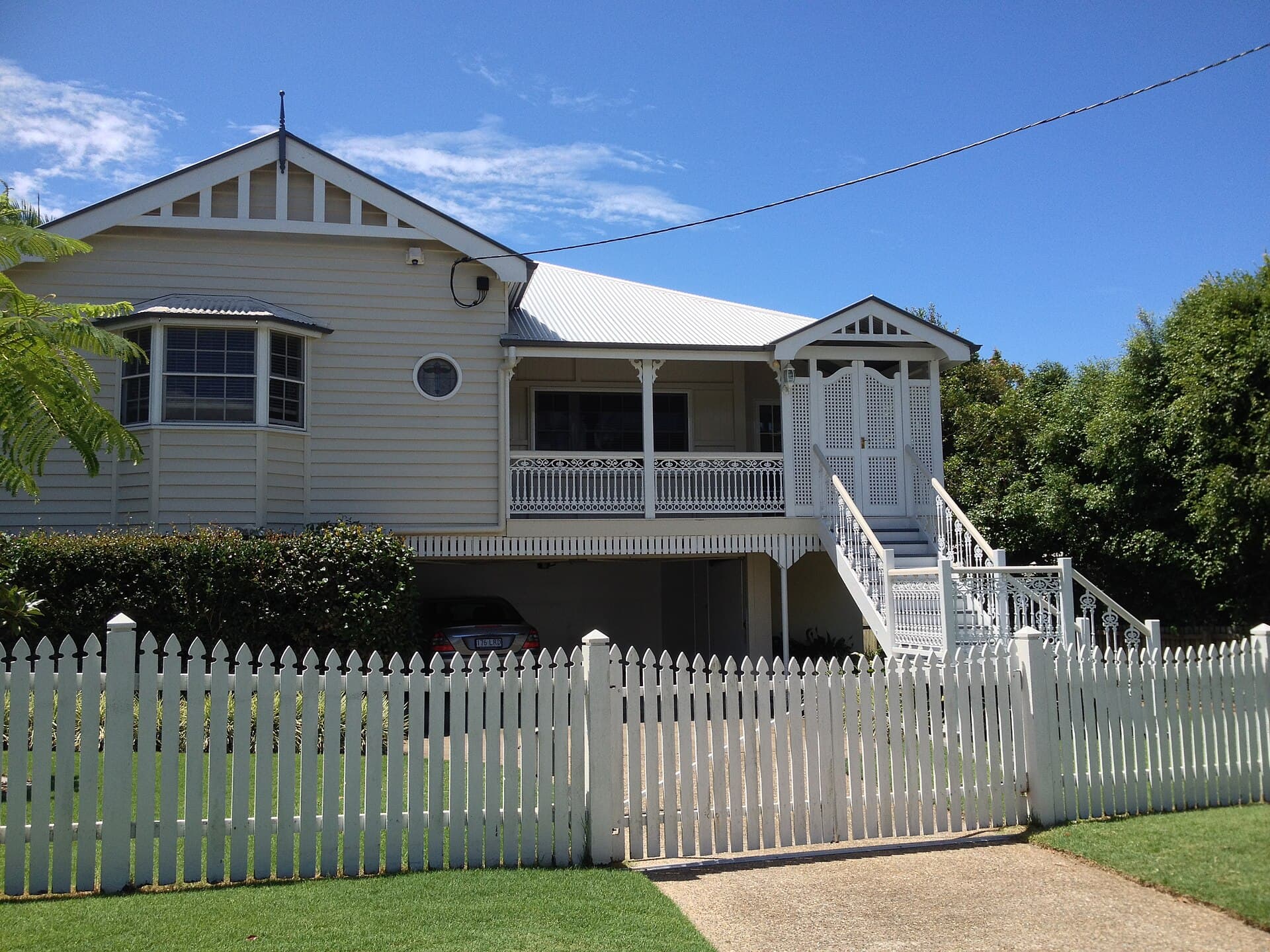
Queenslander in Bennison Street, Ascot, Brisbane. Photograph: Kgbo. CC BY-SA 3.0. Source: Wikimedia Commons. See the image credits page.
The quote arrives, as they do, on the verandah. Sometimes it is a tablet. Sometimes it is a booklet with a colour chart and a page of conditions in a type size that assumes you have already agreed. Sometimes it is a number said aloud, as if the roof were a box of mangoes. In Brisbane the ritual is familiar enough that people apologise for asking to see the lines. They should not apologise. The lines are the job.
A restoration quote is not a price with a story attached. It is a specification that happens to end in a price. If the specification is missing, you cannot compare it to the next one, you cannot hold anyone to it after the first storm, and you cannot tell whether you are buying work or buying a performance of work. This is more useful, as a skill, than collecting three numbers and picking the middle.
The old contractor culture of this city — including the vanished trade site that once lived on this domain — liked to say it would beat any written quote. That sentence still walks the suburbs. Treat it as a warning, not a gift. What follows is how to read the paper so that a contest of discounts cannot hide an empty scope. For the human half of the same problem, see choosing a contractor without a sales pitch. For what the paper should say about the years after the job, see warranties that survive the first storm and products, batch numbers and manufacturer warranties.
Start with the roof, not the total
The first lines should identify the building as if a stranger had to find it after a dispute. Address, roof type, number of pitches, access. “Concrete tile, approximately X squares, two storeys at the rear, solar array on the northern hip, valley to the western neighbour” is a beginning. “House in Ascot, full restoration” is not.
Height is not a vanity detail. A high-set in Red Hill or a split-level in Chapel Hill changes labour, safety and the time a drum of coating spends in the sun while someone moves a setup. If the quote does not mention storeys, scaffolding, or the fact that the rear pitch falls into a gully of lantana, the price has not met the house.
Solar is not a footnote. Arrays have to be worked around, sometimes lifted, sometimes left with untreated stripes that will haunt the next coat. A quote that does not mention the panels you can see from the street has not looked up.
Write the exclusions in your own hand if they are not already written. “Does not include valley replacement unless rusted through” is a sentence you want before the job, not after the first invoice for extras. “Does not include timber or fascia” is another. “Does not include interior plaster” is a third. Restoration quotes love the roof surface and forget the things the roof leans on.
Line items that must appear
You are not being difficult when you ask for these. You are asking the quote to be a document.
Tiles or sheets. How many will be replaced as a matter of course? What happens when the count exceeds that number? Old concrete in Sunnybank Hills and terracotta in Clayfield are not the same spare-parts problem. If the quote says “replace broken tiles as required” without a number or a rate, you have given someone a blank cheque in the polite tense.
Valleys. Name them. Painted, sealed, or replaced. A rusted valley iron that is going to be “treated and coated” is a future leak with a glossy week in the middle. Replacement is a different line, a different waste stream, and a different kind of honesty.
Flashings and penetrations. Chimneys, vents, solar mounts, skylights. Silicone is not a flashing. If the quote says “reseal as required”, ask what the seal is and what it is allowed to cover. A house in New Farm with four later penetrations through an old corrugated roof is a flashing job that happens to include a roof.
Ridge and hip work. Rebedding and pointing are the heart of most tile restorations in this city. The quote should say whether the old mortar is coming off, what the new bedding is, what the pointing system is, and whether it is a flexible compound or a cement that will crack on the same thermal cycle as the last one. “Repoint ridges” is a gesture. It is not a method.
Cleaning. Method, not just the word. Pressure, biocide, or both. Protection of tanks, gardens, windows, solar. A wash that fills a rainwater tank with tile porridge is a line item you will pay for twice, once on the quote and once at the tap.
Coating system. Product family, number of coats, primer or sealer if the system needs one, and the colour with some identification beyond “slate grey”. If they will not name a system, they are selling a look. Looks wash off.
Waste. Old pointing, broken tiles, valley iron, plastic, washings. Where does it go? A cheap quote sometimes goes into the neighbour’s bin, or into a trailer that is not part of any formal disposal. You do not need a lecture on landfill. You need a sentence that says the waste is part of the job.
Site protection. Gutters, downpipes, cars, the pool that every second house in Carina seems to have, the dog that will find the wet membrane. Restoration is messy. A quote that is silent about mess is planning to leave it.
Time and weather. Not a fixed calendar date that will be lied about, but an acknowledgement that wet-season work stops for storms, and that recoat windows are part of the price. A three-day promise in January is often a fiction. See the climate essays if you need the physics; on the quote you only need the humility.
If a line is bundled — “full restoration including all of the above” — ask for it to be unbundled even if the price stays the same. Bundles are how extras hide and how comparisons die.
The extras that arrive after you have said yes
There is a species of quote that is cheap because it is incomplete. The first day on the roof produces a list: valley too far gone, ten more tiles, fascia rotten under the gutter, sarking in rags, a batten that moves. Some of that is genuine discovery. Roofs hide things. Some of it is a sales technique with a tool belt.
You cannot forbid discovery. You can insist on a process. Written variation, photographed reason, rate that was already in the original paper or is reasonable on its face. “While we are here” is not a process. It is a mood.
Watch especially for:
- Valleys that were always going to be replaced, suddenly urgent once the blast has started.
- “The tiles are more porous than we thought,” used to upsell a third coat that should have been in the system anyway.
- Interior stains that become a plastering quote from a cousin.
- Gutters that were never in scope, now “too bad to leave”.
- A colour change mid-job because the sample on the wet tile “looks different”.
A fair contractor will stop and talk. An unfair one will keep talking while the tools keep moving, which is a way of making your pause feel like you are holding up the street. You are allowed to hold up the street.
“We will beat any written quote”
This sentence has a long local history. It sounds like confidence. It functions as a refusal to specify. If the only thing a company knows about its price is that the price will be lower than yours, it does not yet have a price. It has a reaction.
Ask what they will beat. The other company’s total? Their valley line? Their coating system? If the other quote includes valley replacement and this one does not, beating the number is not a service. It is a category error.
There is also the quality problem that everyone knows and no one likes to say on a verandah. Labour is the expensive part of a restoration that is done with manners: the hours to scrape ridges properly, to replace rather than paint a thin valley, to wait for a tile to dry, to cut in a flashing instead of drowning it. A quote that is dramatically lower than two others has usually removed hours. The hours it removes are the ones you cannot see from the kerb.
Beating a written quote can be legitimate when the scopes are truly the same and a firm has spare capacity. It is a red flag when it is the first thing said, before the roof type, before the licence, before the product. A conversation that starts with discount will have to find its specification later, and later is when you have less leverage.
How to compare two papers without losing your mind
Put the quotes on the table. Ignore the totals for a page. Tick, for each, whether the items above exist. Note the product names. Note the tile allowance. Note whether waste and heights are in or out. Then, and only then, look at the money.
If one quote is complete and one is a paragraph, do not average them. Ask the paragraph to become a document or set it aside. You are not obliged to educate a canvasser at your own risk.
If both are complete and one is higher, ask the higher one why. Sometimes the answer is valley iron, or a proper pointing system, or two extra days of weather contingency, or a scaffold you will be glad of. Sometimes the answer is a brand of theatre. Listen for the difference.
Do not forget the unquoted costs. Time off work for a wet-season delay. A tank you cannot use for a week. A dog at the boarding kennel because the biocides and the gate cannot coexist. These do not appear on the paper. They appear in the week.
Relief is not a roofing product.
A quote is also a tone. The paper that is clear about exclusions is often the paper that will be clear about a callback. The paper that is all atmosphere and a ten-year sticker is asking you to buy relief.
Take the document inside
You do not need to sign on the verandah. The storm will still have happened. The moss will still be on the southern pitch. The ridge will still be tired. What changes, if you take the paper to the kitchen table, is that you can read it as a specification rather than as a social event.
Check the licence class. Check that the entity on the quote is the entity that will invoice. Check that “warranty” is attached to workmanship and product in sentences you could read aloud to a stranger. Check that the colour and the system can be matched if a drum is short. Check that you know what happens if it rains on Wednesday.
Then, if the lines are there and the people seem like people who will still answer the phone after the first cell of November, you have something that can be compared, argued and, if you choose, accepted. The total is the last thing on the page for a reason. It is the sum of the work. If the work was never written, the sum is a guess you are being invited to treat as a favour. Decline the invitation. Ask for the lines.
Questions from the verandah
- What must appear on a roof restoration quote?
- The roof type and approximate area, access and height, tiles or sheets to be replaced, valleys and flashings, ridge rebedding and pointing, the coating system and number of coats, waste and site protection, and a list of exclusions. A total without those lines is not a specification.
- Is “we will beat any written quote” a good sign?
- Treat it as a warning. A price that exists only to undercut another price has not been built from this roof. You are being offered a contest, not a scope.
- Should I accept a quote written on the spot after a free inspection?
- You can accept a written inspection. Be slower with a full restoration contract signed the same afternoon, especially if extras, heights and product names are still verbal. Take the paper inside. Read it as if you will have to explain it to an insurer.